About
I study at Taejae University in Seoul, founded in 2023, and I joined its first cohort at 15.
In school, whatever I learned by just listening was gone by the next vacation. At Taejae, every class runs on active learning, so class time goes to student-led projects and discussions instead of lectures.
After three semesters in Seoul, my cohort began moving to a new city every semester, the Global Rotation, and in most cities a small team takes on a local problem as a civic project.
My dream is a robot built for any application, from search-and-rescue to robots in people’s homes, and this timeline is how I’ve been building toward it.

My Taejae timeline

Seoul
The first three semesters, at Taejae’s home campus in Seoul, and the winter break that followed, before the class started moving.
From this time
Civic projectThe uncomfortable truth about plastic delivery containers
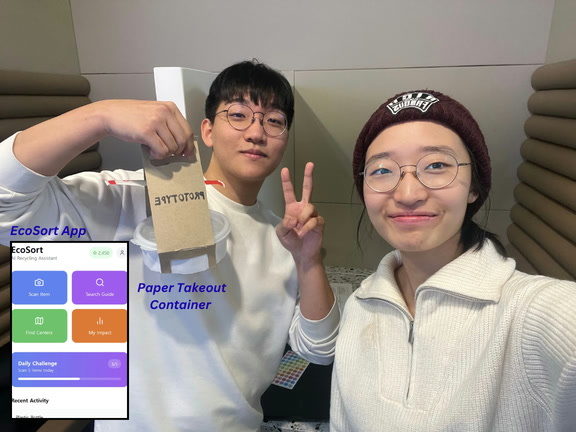
In a decade, Korea’s food delivery market grew nearly ninefold, from 334.7 billion won and 870,000 users in 2013 to about 3 trillion won and 25 million users in 2024. Around a million meals now arrive every day, each in a few plastic containers and a large order in twenty or thirty, while the plastic recycling rate has slipped since its 2017 peak of 57.5% and waste disposal costs the country nearly 23 trillion won a year. After surveying households on what happens to their delivery waste, my teammate and I built a prototype of a paper-based takeout container that cafés and restaurants could hand to customers in place of plastic, along with EcoSort, an app that identifies an item from a photo, shows how to dispose of it, and estimates its carbon footprint and roughly how much you have given back to the environment.
Oxford
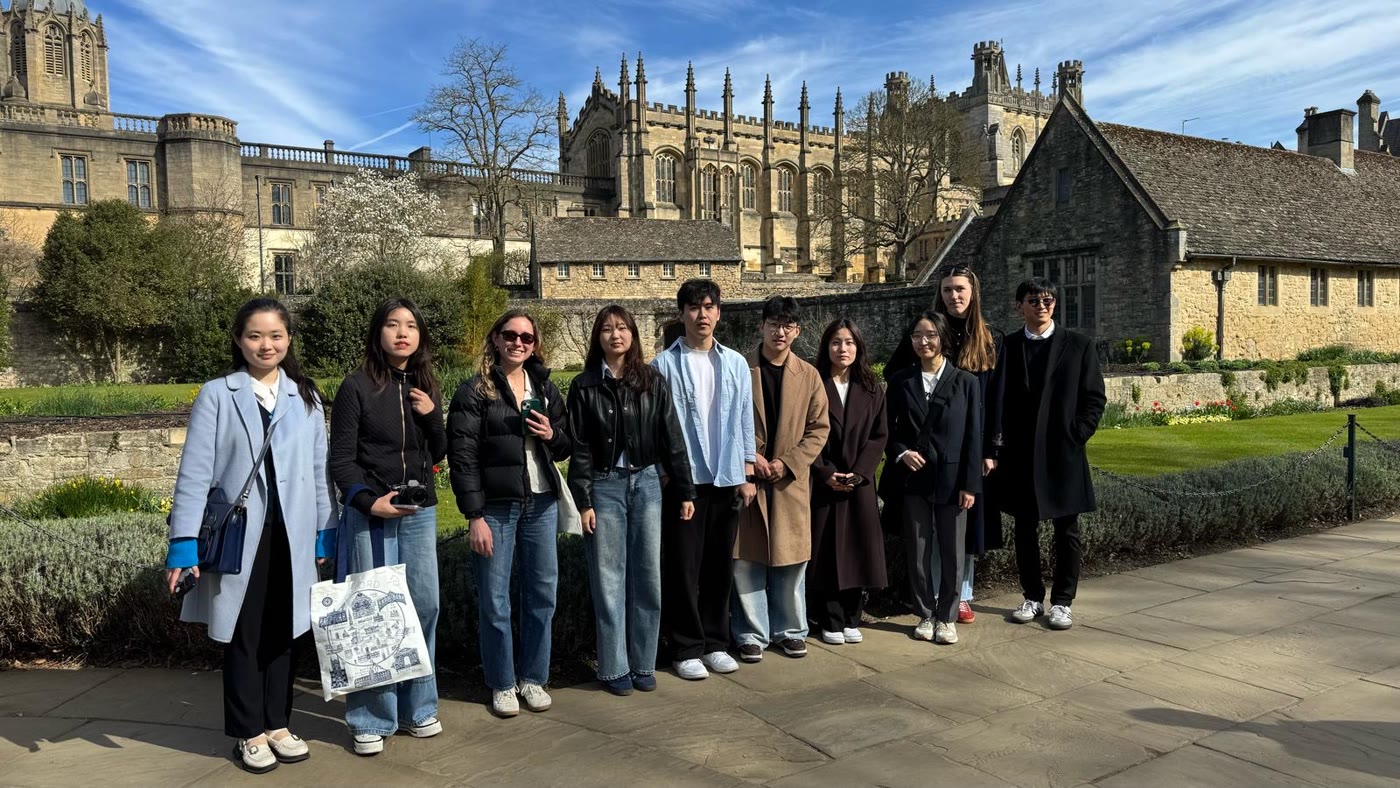
Before Japan, a week at Kellogg College, Oxford, as one of eight Taejae students in the Oxford-Stanford-Taejae Fellowship. The Sustainability Changemakers UK programme, led by Stanford’s William Barnett, looked at sustainability through finance, law, ethics, and AI. In London we visited Chatham House, the King’s Foundation, the London Stock Exchange for green finance, and The Economist; back in Oxford came talks on climate litigation, carbon measurement, green supply chains, and the energy transition.
Tokyo
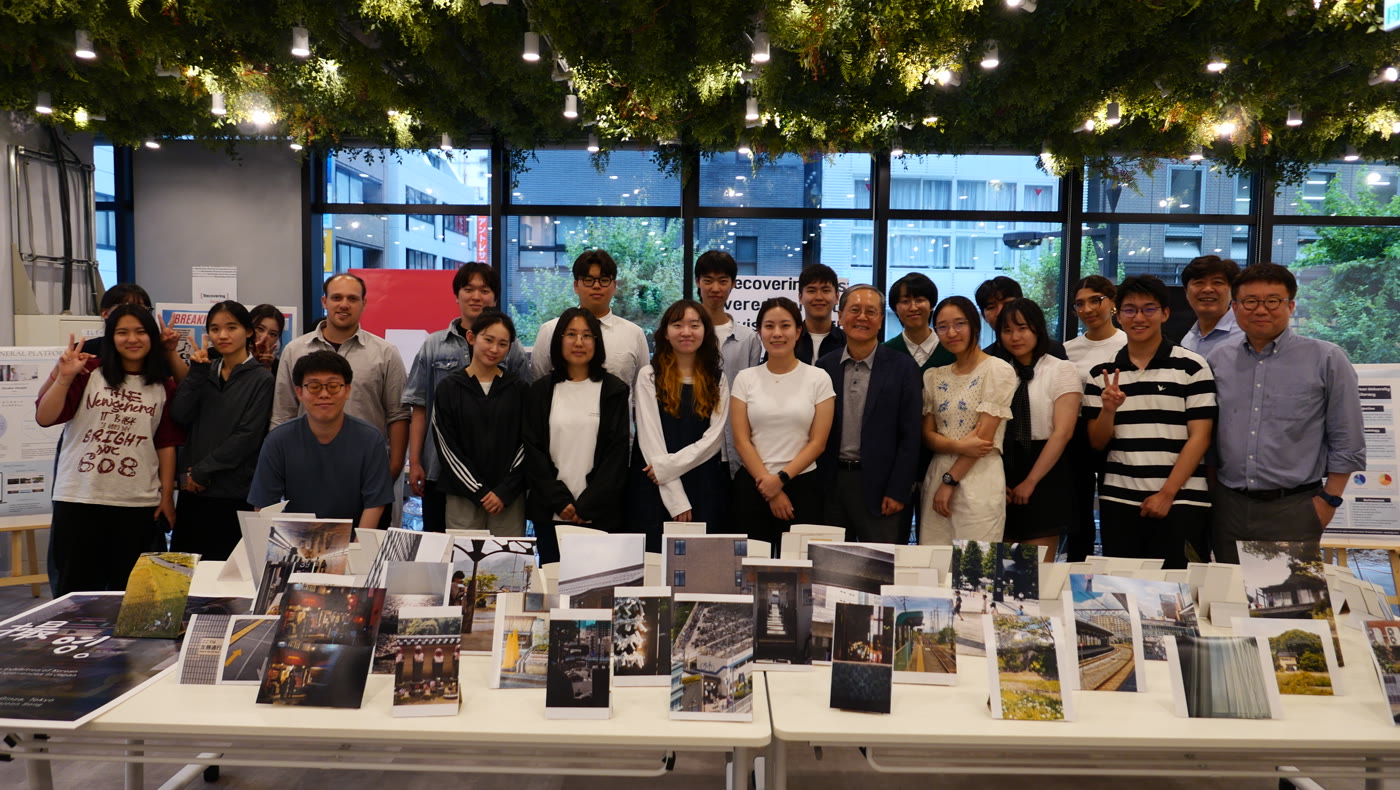
Our first semester abroad. We lived in Taejae’s student residence outside Tokyo and studied alongside students at Kanda University of International Studies, with field trips to university labs and to the Japan Energy Summit at Tokyo Big Sight.
In April, I took the train to Yokohama to present Watch-Out at CHI 2025.
From this time
Civic projectCan vertical space be socialized like horizontal space?
After the 2011 Great East Japan Earthquake, over 60% of evacuees lived not in prefabricated temporary housing but in privately rented apartments, the minashi kasetsu, placed among strangers with no shared space and at risk of isolation and kodokushi, dying alone. Drawing on research that social capital predicts recovery better than economic aid, my teammate and I asked how design could rebuild it without changing the buildings. We proposed a first-floor common space such as a preschool, flea markets in unused space, public gardening that gives neighbors a shared duty, and decorated doors and status lights that let people notice one another.
Seoul summer 2025
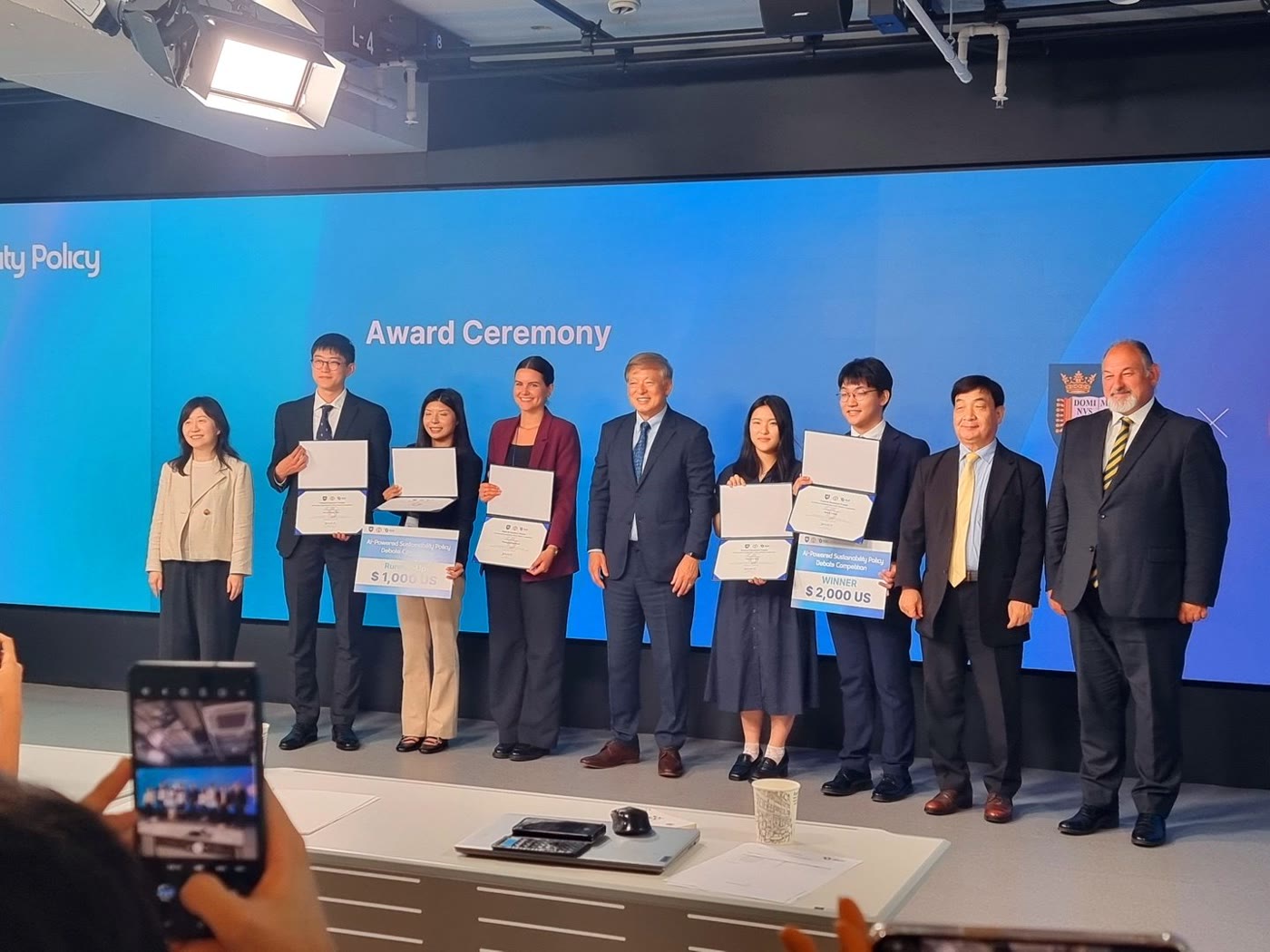
Back in Seoul between Japan and San Francisco. In August, a teammate and I won the Oxford-Stanford-Taejae AI-Powered Sustainability Policy Debate, presented our work to the Deputy Prime Minister, and gave the $2,000 prize to WWF Korea.
San Francisco
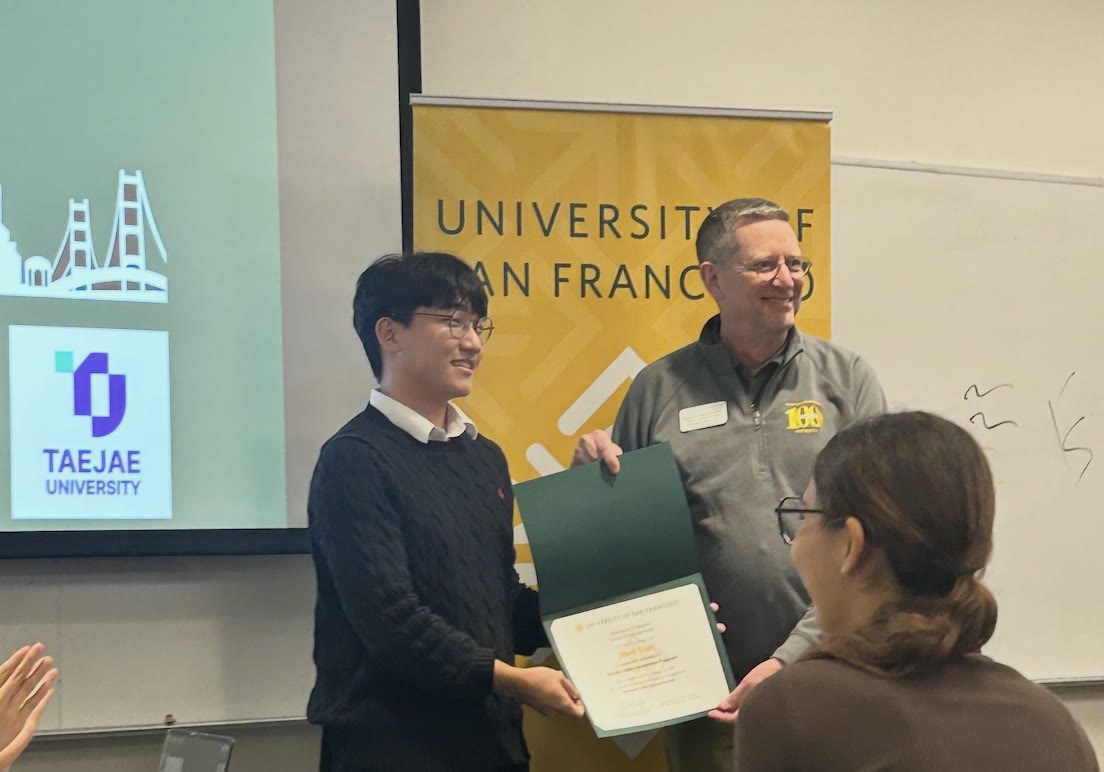
We were visiting students at the University of San Francisco and lived on its campus. I took Intro to Digital Electronics and Silicon Valley Immersion, with field trips to Prof. Welander’s lab at Stanford, Prof. Ken Goldberg’s lab at UC Berkeley, Intuitive, and Plug and Play. As vice student body president, I organized our events, from city visits to picnics.
From this time
Civic projectRedesigning brain-tech: EEG from the hospital to the home
San Francisco leads the world in brain-computer interfaces, yet to most people the technology feels like surveillance or a toy for the elite. Through seven interviews and four site visits, including conversations with Ken Goldberg at UC Berkeley and William Bosl at USF, I looked at why EEG stays in hospitals, and proposed four ways to bring it home: a web pipeline for real-time visualization, co-design workshops with citizens, low-cost maker toolkits for students, and pilots in San Francisco schools and public spaces.
New York
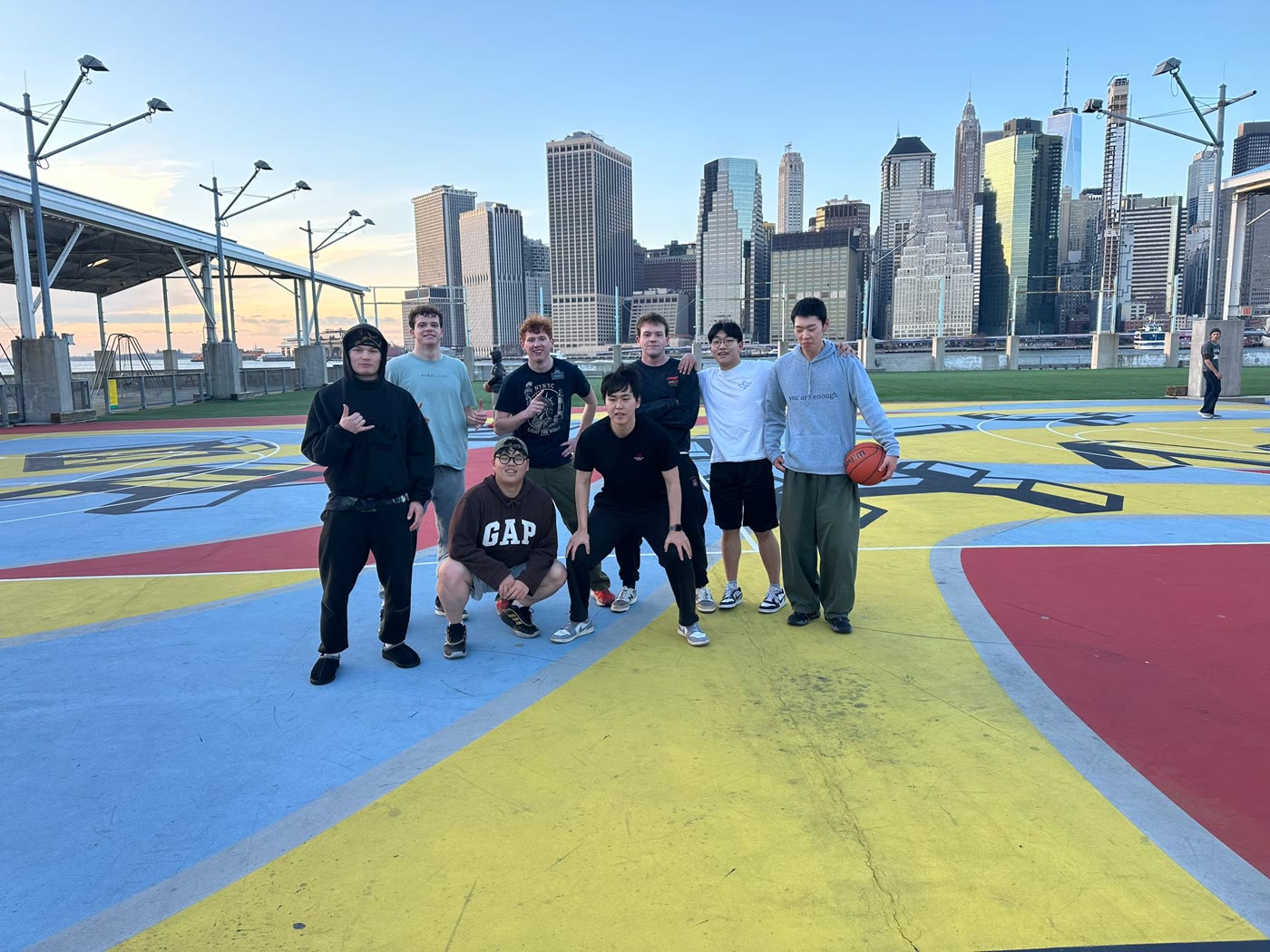
We studied at Pace University in Lower Manhattan, where I took Artificial Intelligence and US History, and lived in a shared residence a few subway stops away.
New York was also where PDPM, the processor idea I had been building, needed to become a paper. I wanted a professor who could help me write it and check the technical details, so I kept traveling to Boston and Washington, D.C., to find one. I met Prof. Hanseok Ko at the Catholic University of America, and then Prof. Minhee Jun, who became my co-author on the paper.
Seoul summer 2026
Back in Seoul for a research internship at ROBOTIS, working on VLA and world models with three real robots.
From this time
Shenzhen
Where the class is this semester, with an in-person course and a new civic project in progress.
From this time
Coming soon!
Coming soon!